


The microwave beeps, steam rises from the plate, and dinner should be ready. So you take a bite, only to discover the center is still cold. Some leftovers can become more than just a disappointing meal if they aren’t reheated safely.
With all the scary information circulating about foods you shouldn’t reheat. At Cooking Office, we don’t just stop there. “Never” is a strong word—the real issue is how these five foods are reheated in the microwave. Even though the outside of a dish appears hot, microwaves can create hot spots inside. There are five common foods that require special consideration when reheating in the microwave due to their shape, thickness, or consistency.
Thick Pieces of Meat
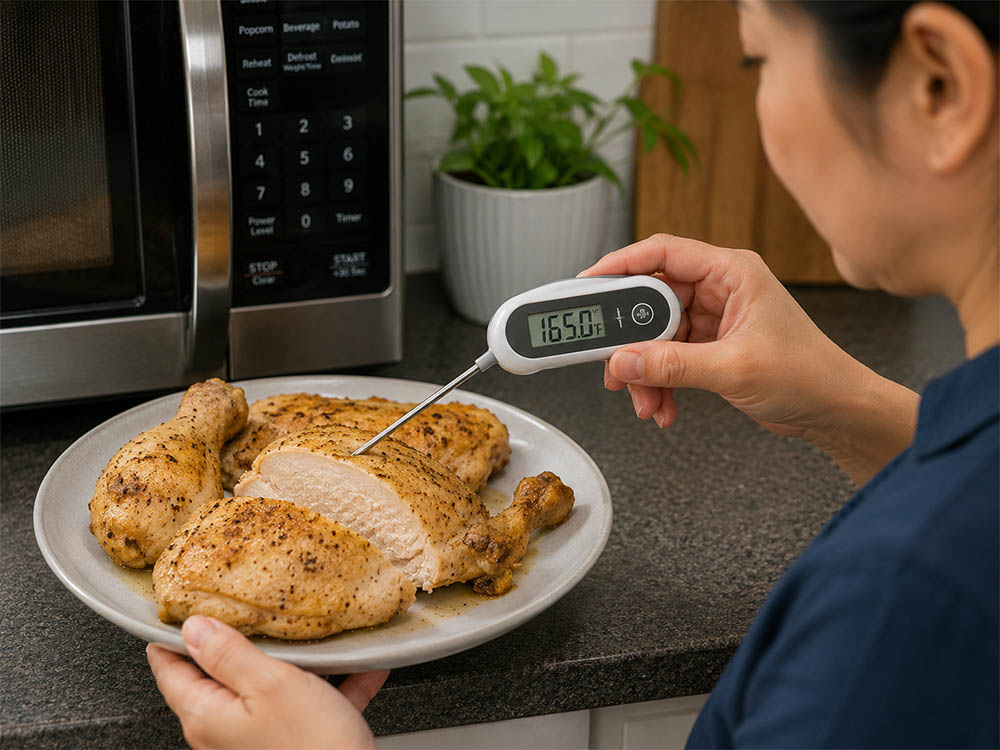
An entire chicken breast, a thick roast, or a large piece of meat may also be hot on the outside and cool on the inside.
If a microwave oven is available, divide large items into smaller portions and arrange the pieces evenly. Stir or rotate the food during reheating; use a food thermometer to check the thickest parts.
ADVERTISEMENT
Leftover food must reach 165°F (74°C) throughout.
Stuffed Foods
Foods with dense centers can be difficult to reheat evenly. These include stuffed chicken, meat and loaves.
The exterior can get very hot before the filling is fully heated. Dividing the food into smaller portions may help. Don’t rely on steam or the outside temperature to judge whether it’s fully reheated. Use a food thermometer to check the center.
Dense Casseroles
A block of lasagna or a thick casserole makes it easy to ignore the areas of the microwave that are colder than others. With a big block of lasagna or a thick casserole, cold spots under the bubbling surface can go unnoticed.
When reheating, cut large portions into smaller pieces. Cover the food to keep it moist, turn it over, and check the temperature in several spots. Guidelines also suggest to leave the food for a minute after microwaving. The heat continues to spread even after the microwave is stopped.
Rice Dishes
While reheating in the microwave is a common culprit of rice issues, it’s not the only one. The problem is that the rice is left at room temperature for too long before being refrigerated. There is no way to be certain that food stored unsafely can be saved by reheating it later.
If the rice was promptly refrigerated, spread it out in a microwave-safe dish, moisten with a bit of water if necessary, cover it, and heat it until the rice is hot throughout. Reheating rice cannot make it safe if you don’t know how long it was left at room temperature before being refrigerated.
Thick Soups and Gravies
Thick soup, sauce, or gravy in a deep container may not heat evenly in a microwave. Bubbles might form around the edges, leaving cooler pockets in the middle of the dish.
Stir thoroughly when reheating and test for cold spots. The USDA recommends heating liquid-based foods until they reach a full rolling boil. Consider using a saucepan for better heat control.
The Microwave Is Not the Real Problem
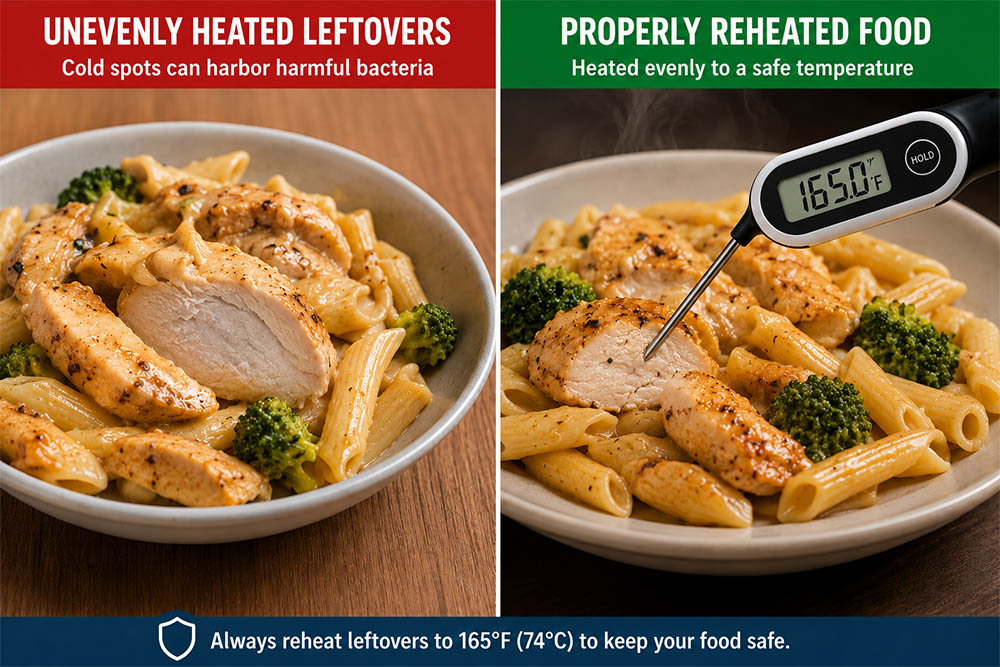
These foods do not become toxic simply because they are reheated in a microwave. The true problem is improper storage and non-uniform reheating.
The USDA recommends that leftovers be heated to 165°F (74°C). When preparing food in a microwave, arrange the food evenly, cover it, stir or turn it, let it stand, and check the temperature in several spots.
ADVERTISEMENT
So, is it really “never” that you should microwave these five foods? Not necessarily. If you are not confident the microwave will heat it evenly, use the oven or stove and make sure it reaches 165°F (74°C) throughout.
ADVERTISEMENT