

Preparing dinner can be quick. Chicken is prepared, tomatoes come out of the fridge, and bread is sliced while the meal cooks. In that process, one kitchen surface can spread germs from one food to another without you noticing.
At Cooking Office, we don’t ignore those little habits that matter most, and one that can be overlooked is cross-contamination on the cutting board. A cutting board may look clean even though harmful bacteria remain on the surface.
The Habit: Moving From Raw Meat to Ready-to-Eat Food
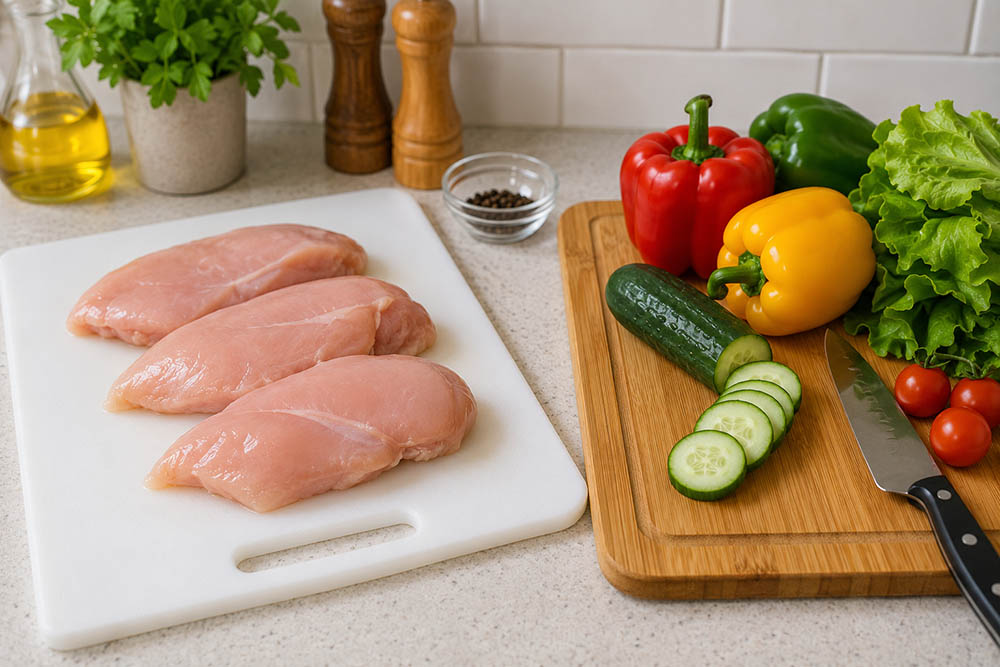
The hazardous practice is using a cutting board for raw meat, poultry, or seafood and then cutting food on it that will not be cooked.
Raw animal products and their juices may contain harmful germs. Later, if the cutting board comes into contact with tomatoes, lettuce, fruit, bread, or cooked food, germs can spread to those foods.
ADVERTISEMENT
This is cross-contamination.
The risk is significant because ready-to-eat foods lack an additional cooking step to destroy potentially harmful bacteria.
A Quick Wipe Is Not Enough
A dish towel or paper towel can be used to wipe the board after cutting raw chicken and remove visible liquid, but that is not the same as washing.
The USDA and CDC recommend washing cutting boards, utensils, dishes, and countertops after handling raw meat and before handling the next food.
Don’t forget the knife, either! Washing the board is not enough if the same unclean knife is used on ready-to-eat foods such as salad vegetables.
The Simplest Fix Is Separation
If there is room, use separate cutting boards for fresh fruits and vegetables, bread, cooked foods, and other ready-to-eat ingredients.
The boards do not have to be made of different materials. A different color, label, or storage location can simply remind you which board is for raw animal products. If using a single board, wash it thoroughly between uses with hot, soapy water.
Do Not Put Cooked Food Back on the Raw Board
This can also occur after a meal.
A hamburger, steak, or piece of chicken should not be returned to the unwashed board or plate that previously held it while raw. Otherwise, after cooking, the germs can be transferred back from the contaminated surface.
Wood Is Not Automatically Unsafe
It is commonly thought that plastic is the only safe material to use for raw meat, but USDA recommendations are different. Both wood and nonporous cutting boards are acceptable.
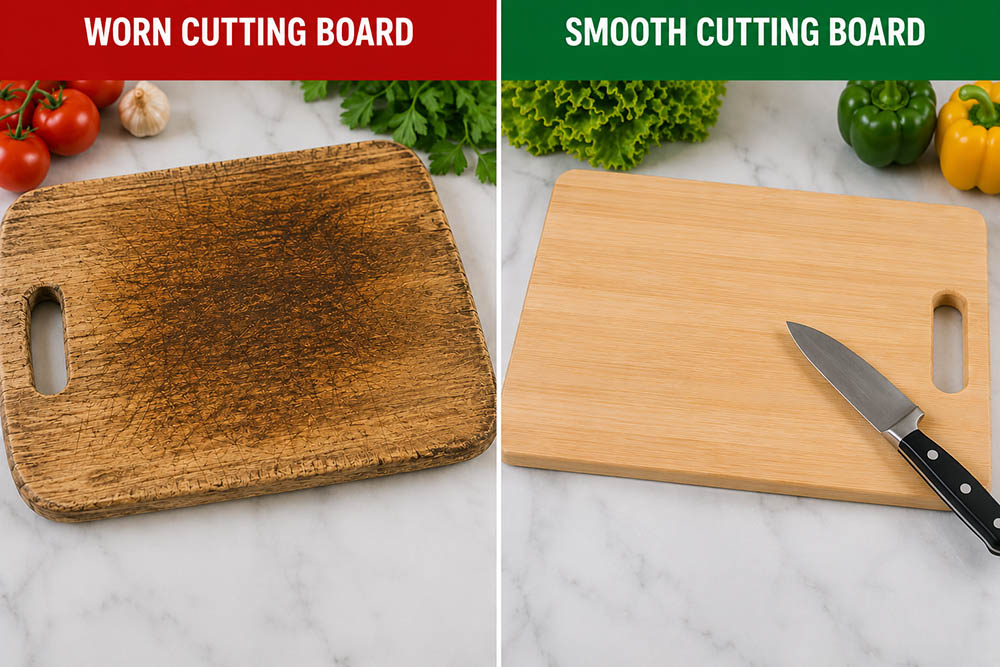
You don’t have to choose between wood and plastic; you also need to consider the board’s condition. Replace the board if it is very worn and has deep grooves where dirt can become lodged.
The Habit to Break
The wrong thing to do is not to have a cutting board. It’s taking animal products from raw to ready-to-eat without cleaning the board, knife, and other surfaces in between.
Using separate boards makes that error less likely. If using one board for everything, clean it between each use.
ADVERTISEMENT
After the raw chicken has been removed, the surface might appear empty. It’s important that the germs go with it.
ADVERTISEMENT